Robot cells your own people retrain.
Kaliber is a work cell for shops that run two hundred parts, not two hundred thousand. Show it the new part and it works out the grip, the path and the tolerance itself. No integrator, no rewrite, no six-week wait for a slot in someone else's calendar.
- MEDIAN CHANGEOVER
- 38 min
- CELLS LIVE
- 340
- PAYBACK
- 11 mo
Running on the floor at
- Brantwerk
- Norlin Precision
- Hartmann Fabrik
- Okuda Kikai
- Delvaux Métaux
- Ravenna Presswork
- Stedman Tool
- Vessel & Co
Fleet readings
Every cell reports the same six numbers, and so do we.
These are the running totals across the fleet, read on the first of the month. We publish them whether they moved the right way or not.
38min
MEDIAN CHANGEOVER, PART TO PART
340
CELLS LIVE
Across 9 countries
99.2%
FIRST-PASS YIELD
Fleet median, 90 days
11mo
MEDIAN PAYBACK
From the day it runs
1.4%
UNPLANNED DOWNTIME
Spares included
The arithmetic
Why the cell you were quoted never paid back.
A conventional cell is cheap to run and expensive to change. That is fine on a run of fifty thousand and ruinous on a run of two hundred, which is the run most shops actually have. Kaliber moves the cost out of changeover.
CONVENTIONAL CELL
- Integration
- €96,000
- Lead time to first part
- 14 weeks
- Changeover to a new part
- 3 to 5 days
- Who can do it
- The integrator
- Economic run length
- 10,000+
KALIBER K3
- Integration
- €18,000
- Lead time to first part
- 6 weeks
- Changeover to a new part
- 38 minutes
- Who can do it
- Your setter
- Economic run length
- 120+
Figures are the median of the last 40 installations. Your quote will say your numbers, and we will put the changeover time in the contract.
The system
One controller, one vision head, whatever arm you already own.
Kaliber is not a robot. It is the part that makes a robot worth owning at low volume, and it bolts onto the arms most shops already have on the floor.
Teach it by showing it
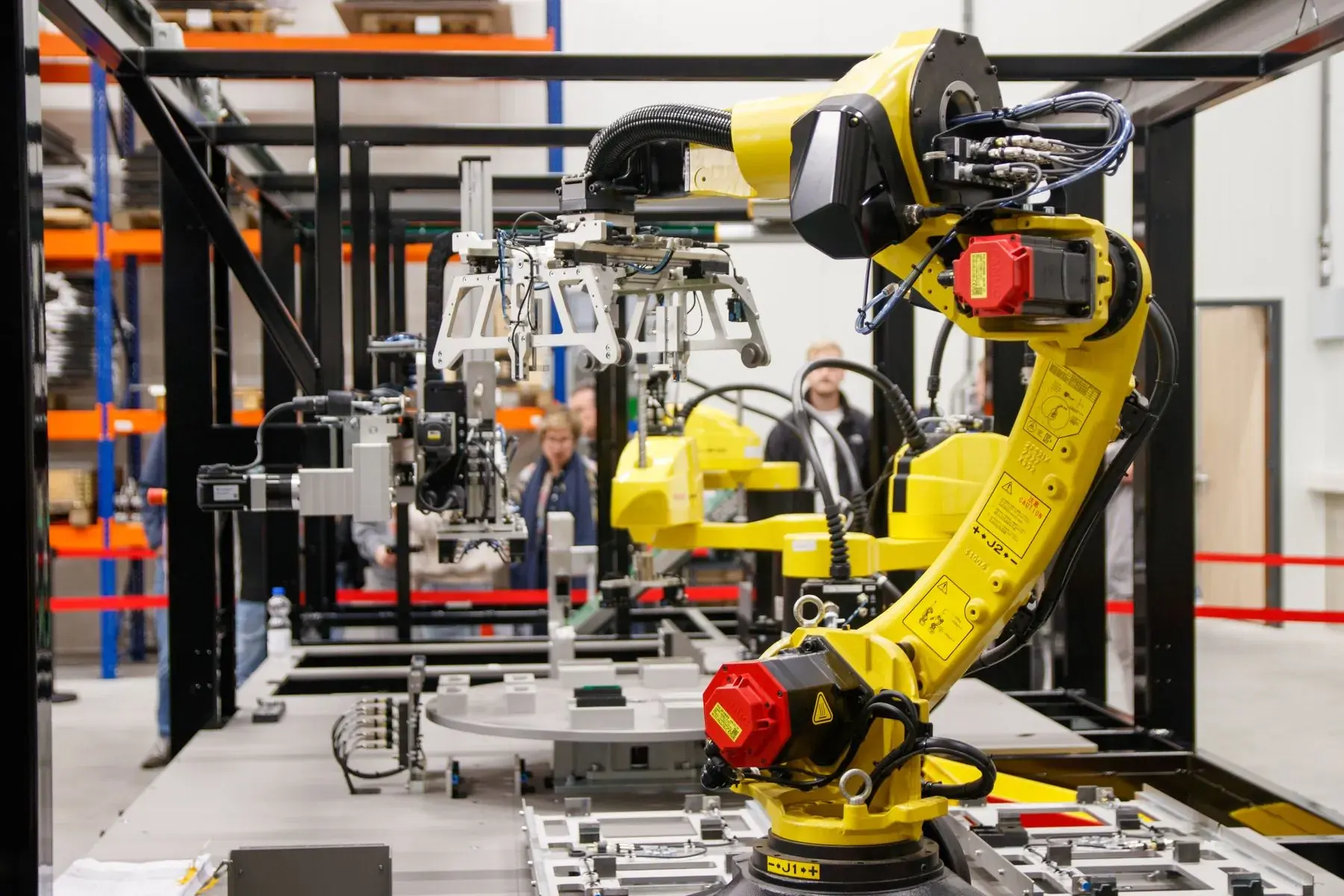
Put the part in front of the head and walk the arm through the move once. Kaliber reads the geometry, plans the grip and holds the tolerance from there.
38min
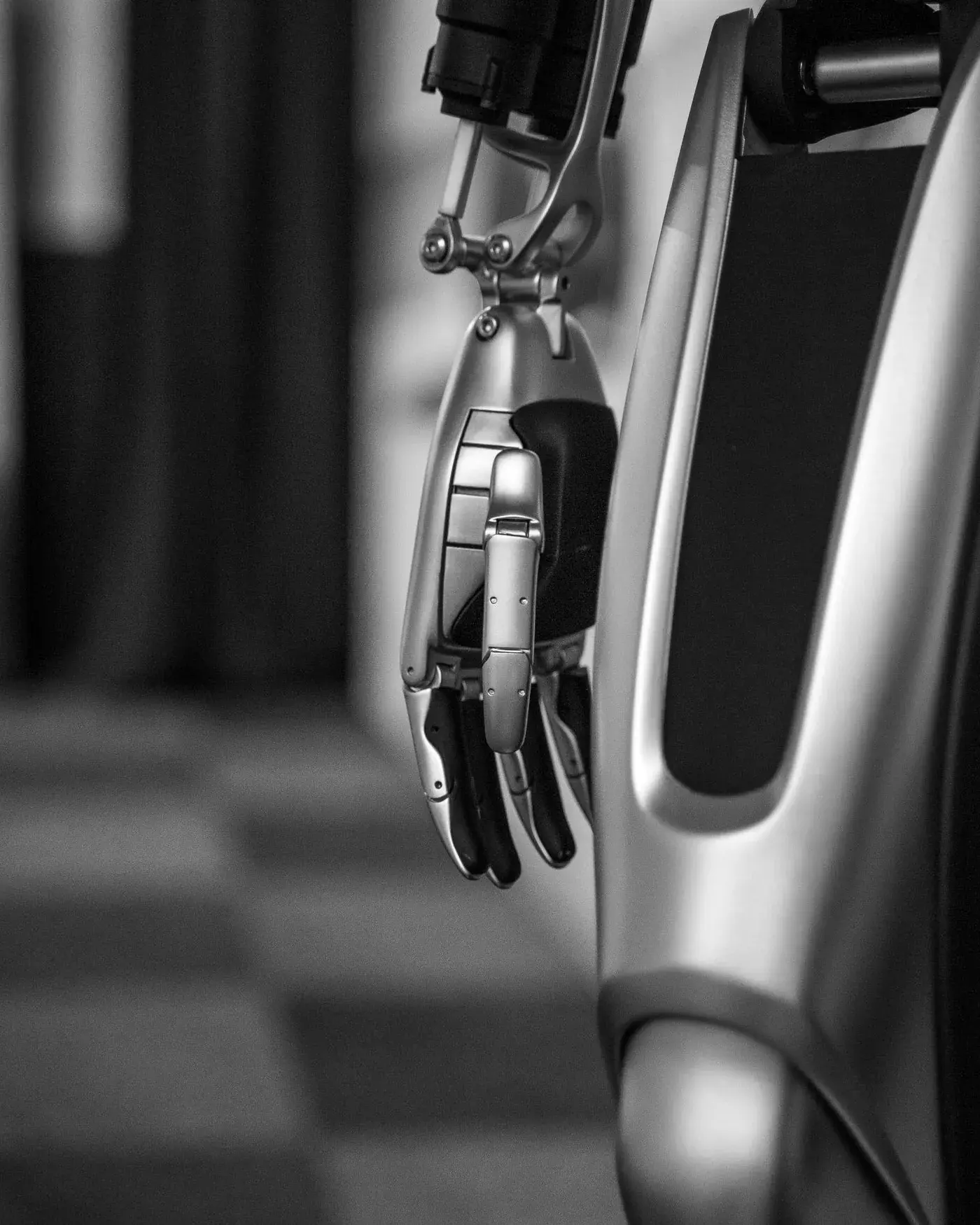
Sees the part, not a fixture
A 4-camera head with structured light, so an unjigged part in a tote is as pickable as one in a nest. You stop paying for fixtures.
99.2%
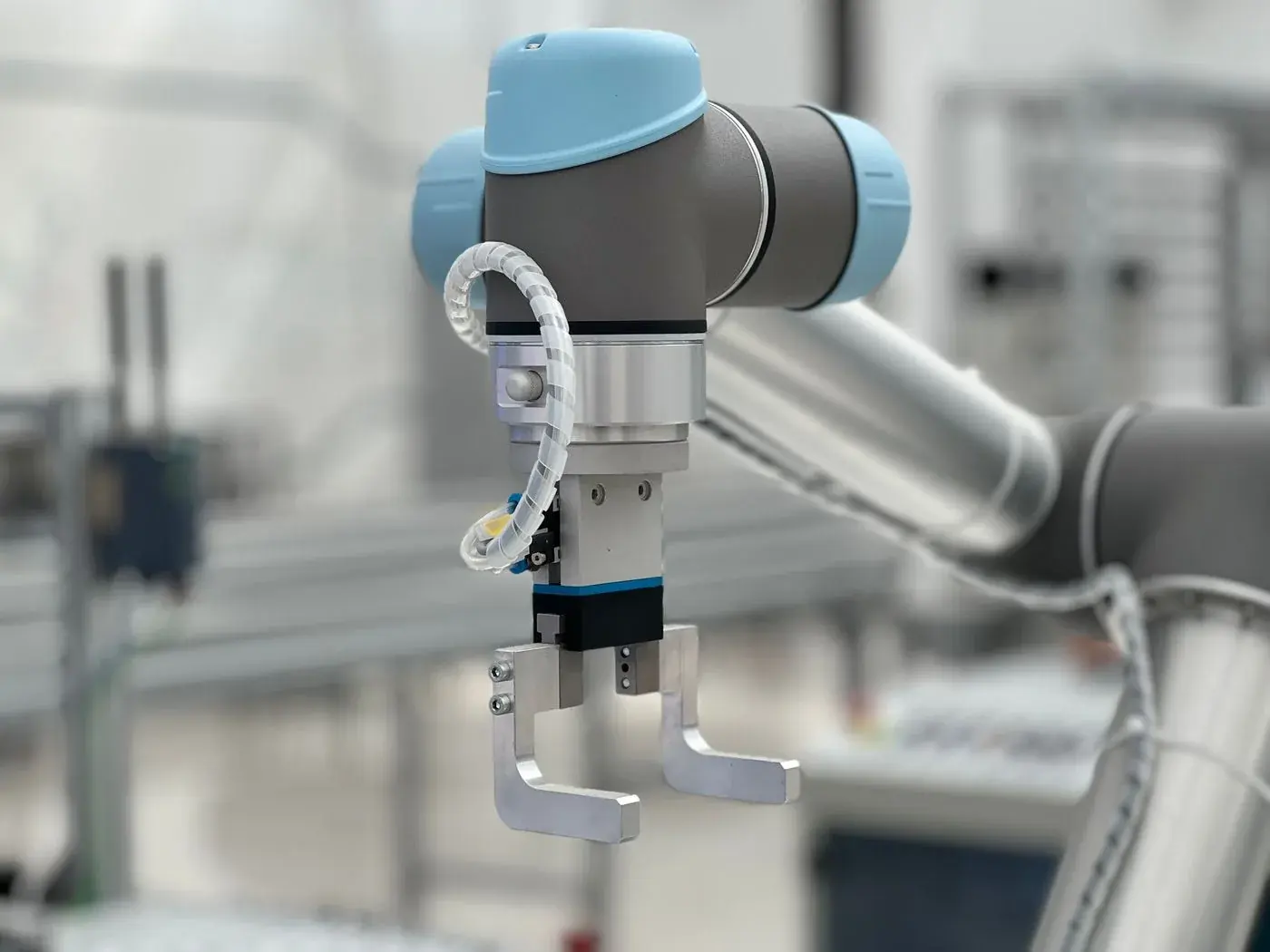
Arm agnostic
Drivers for the eleven arms that make up most of the installed base in Europe. If yours is on the list, the controller is the only thing you buy.
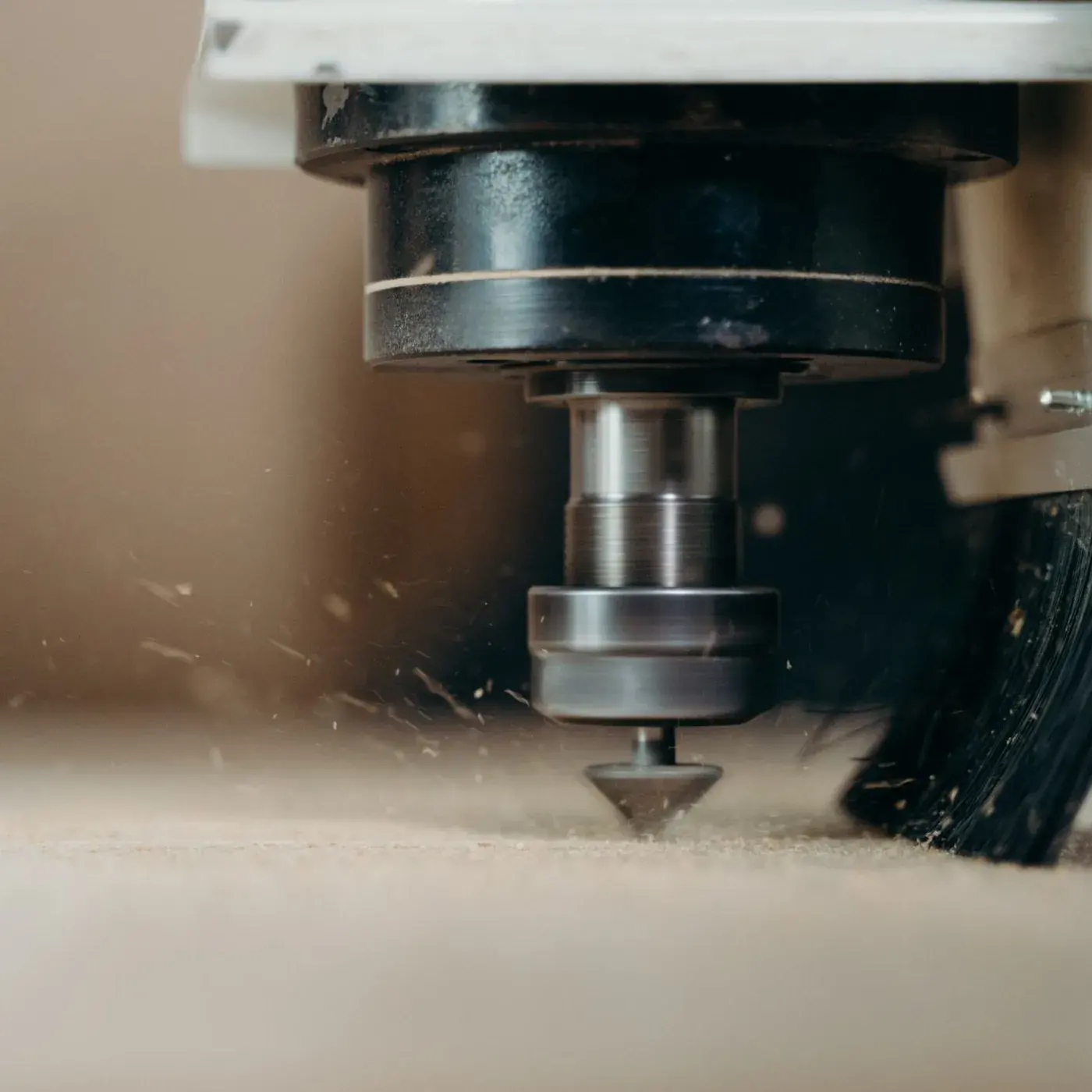
Deployment
Six weeks from the line walk to the first good part.
Fixed scope, fixed price, and the dates in the contract. If we miss the rate we agreed, the pilot is refunded and the cell goes back on our van.
The test is not whether our engineer can retrain it. It is whether yours can, on a Tuesday, without phoning us.
- WEEK 0 / HALF A DAY
The line walk
Half a day on your floor. We pick the cell with the worst changeover cost, count the parts through it and write down the rate we think we can hit.
- WEEKS 1-4 / OFF YOUR FLOOR
The bench build
We build the cell around your arm and your three worst parts in Eindhoven, and send you a video of each one running before anything ships.
- WEEKS 5-6 / ON YOUR FLOOR
Handover
Two days on site. By the end of them your setters have retrained the cell onto a fourth part without us in the room, because that is the whole test.

The objections
What a plant manager asks in the first ten minutes.
In the order they usually come up.
It will not see a black part
Structured light, not contrast. Matte black, oiled steel and clear polycarbonate all resolve, because the head measures depth rather than reading an edge.
My setters are not programmers
That is the point. There is no code path in the product. The teach pendant asks four questions and the longest answer is a number.
I am not putting my line on the internet
The cell runs air-gapped. Updates arrive on a signed USB key and nothing leaves the building unless you switch the fleet reporting on.
It has to pass our safety case
ISO 10218 and TS 15066 out of the box, with the risk assessment written for your cell and signed before handover, not after.
What happens when it stops at 03:00
Spares on site from day one and a four-hour response inside the EU. Downtime across the fleet last year was 1.4 per cent, and we publish it monthly.
I already bought a robot in 2019
Then you probably only need the controller and the head. Eleven arm families are supported and the retrofit is a two-day job.
Proof
From the people who have to make the rate.
Every quote below is from someone who runs a Kaliber cell on their own floor, and every one of them agreed to take a call from you.
We were quoting six weeks of lost capacity every time we changed the family over. It is now an afternoon, and it is our own lads doing it.
I did not believe the changeover number. We timed it ourselves on the third part: thirty-one minutes, and nobody from Kaliber was in the building.
The bit I did not expect was the safety case arriving finished. That is normally where four months go.
It picks parts out of a tote that we used to hand-load into a nest. We took the fixture budget out of the year entirely.
We run 190-piece batches. No robot has ever made sense here before. This one paid back in nine months.
Two of our arms are eleven years old. Kaliber drove both of them without so much as a new cabinet.
It picks parts out of a tote that we used to hand-load into a nest. We took the fixture budget out of the year entirely.
We run 190-piece batches. No robot has ever made sense here before. This one paid back in nine months.
Two of our arms are eleven years old. Kaliber drove both of them without so much as a new cabinet.
We were quoting six weeks of lost capacity every time we changed the family over. It is now an afternoon, and it is our own lads doing it.
I did not believe the changeover number. We timed it ourselves on the third part: thirty-one minutes, and nobody from Kaliber was in the building.
The bit I did not expect was the safety case arriving finished. That is normally where four months go.
Pricing
Published, and the first one is refundable.
Nobody buys a robot on a website. You can at least find out what it costs on one.
Pilot
€18,000
one cell, fixed
One cell, six weeks, three parts. Refunded in full if it misses the rate we wrote down on the line walk.
- Line walk and written rate target
- Bench build on your arm
- Three parts taught and timed
- Two days of handover on site
- Refund if the rate is missed
Line
MOST SHOPS€4,900
per cell, per month
The way most shops run after the pilot. Unlimited changeovers, spares on site, and the fleet numbers on your own dashboard.
- Everything in Pilot
- Unlimited parts and changeovers
- Spares held on your site
- Four-hour response inside the EU
- Safety case maintained as you change parts
- Monthly fleet reporting
Plant
Talk to us
12 cells and up
For a floor rather than a cell. A named engineer, your own teach library, and a rate target per line instead of per cell.
- Everything in Line
- Named engineer, on site monthly
- Shared teach library across cells
- Rate target written per line
- Air-gapped fleet reporting
Prices exclude the arm and VAT. A cell needs 3-phase, four square metres and a floor that takes an anchor bolt.
Questions
The rest of it.
Which arms do you drive?
Eleven families, covering most of what is installed across Europe: the common six-axis industrial arms and the collaborative arms in the 5 to 16 kilogram class. If you tell us the model on the line walk we will tell you yes or no on the spot, and we will tell you no if the answer is no.
What happens to the cell if we stop paying?
It keeps running. The subscription covers spares, response and the safety case as your parts change, not the right to use the machine. A cell that has been abandoned still makes parts, it just stops getting looked after.
How long does a new part actually take?
Thirty-eight minutes is the fleet median from the old part coming off to the new part running at rate. A part with a difficult grip, a thin wall or a mirror finish takes longer, and the pendant tells your setter that before they start rather than after.
Do you need our CAD?
No. It helps, and the cell will use it if you have it, but the whole product assumes you do not. Most of the parts we are shown were drawn by someone who left in 2011.
Is any of this running in the cloud?
None of the things that make a part. The cell plans and picks entirely on the controller in the cabinet, air-gapped, with no dependency on a network. Fleet reporting is optional and off until you turn it on.
What if it does not work on our parts?
Then the pilot is refunded and we take the cell away. We would rather find that out in week one of a line walk than in month nine of an integration, which is why the line walk ends with a number written down.
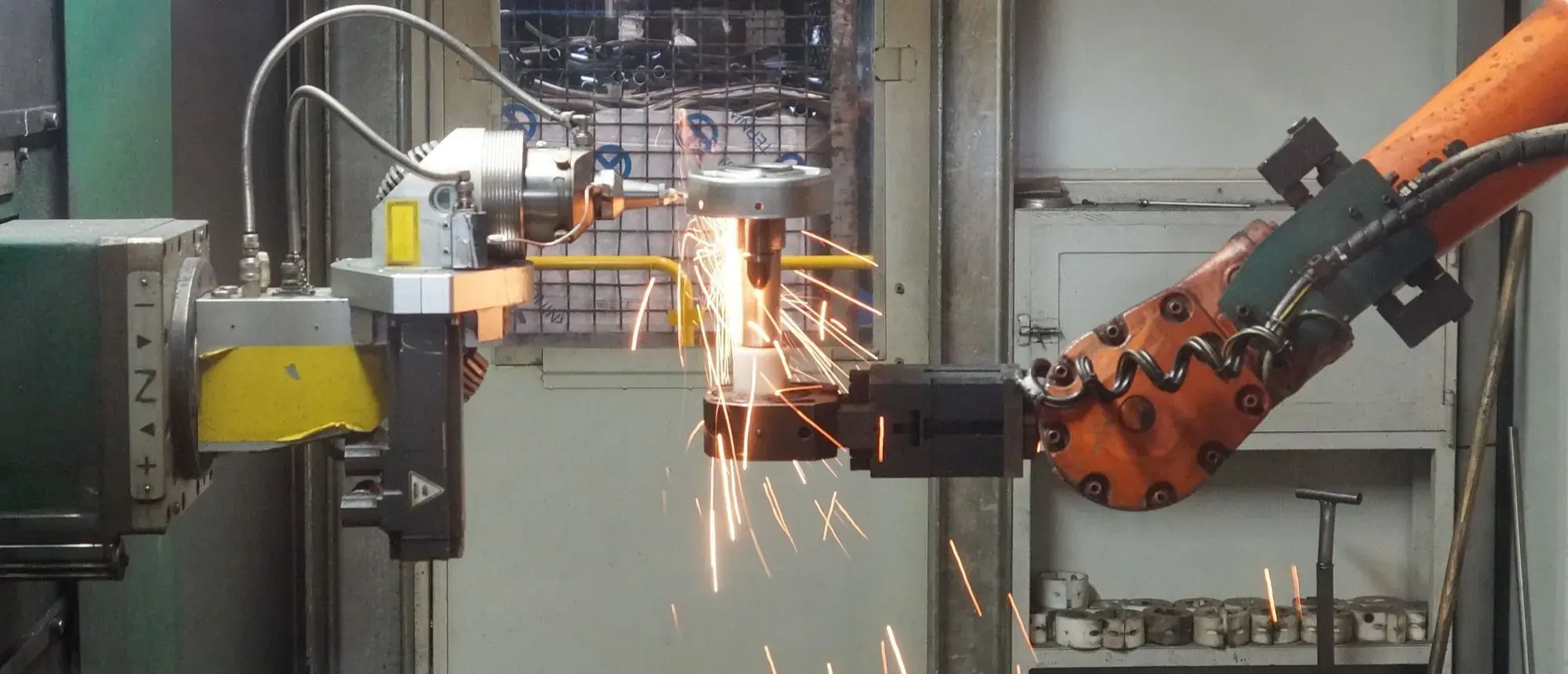
Bring us the part you gave up automating.
Half a day on your floor, a rate written down, and a price. If the arithmetic does not work we will say so on the day and you will have lost an afternoon.
No procurement conversation. No slide deck. One engineer and a tape measure.